Varnish Application
What is it for?
Varnish application often constitutes the final step of an artwork’s conservation process. This technical intervention, far from being trivial, plays a fundamental role in protecting and enhancing the artwork, while considerably influencing its visual perception.
Essential protection for the artwork
Varnish fulfills several crucial protective functions:
Physical barrier against environmental aggressions (dust, atmospheric pollution)
Screen against harmful UV radiation that can alter pigments
Protection against humidity and its deleterious effects on pictorial materials
Prevention of oxidations that can affect certain pigments or binders
A determining aesthetic dimension
Beyond its protective role, varnish profoundly influences the artwork’s perception:
Colour saturation that recovers its depth and original vivacity
Visual unification of different pictorial surface zones
Gloss modulation according to artistic intention and historical period
Harmonisation of retouching with original parts
A particular stake for modern and contemporary art
For modern and contemporary artworks, my specialisation area at Atelier CROMA, varnish application presents specific challenges:
- Diversity of artistic intentions concerning surface aspect (glossy, satin, matte)
- Deliberately unvarnished artworks by artist’s conceptual choice
- Composite materials reacting differently to varnishes
- Variable sensitivities to solvents of different contemporary mediums
- Matte/glossy contrast plays being integral part of artistic expression
How I proceed at Atelier CROMA
As a conservator specialized in modern and contemporary art, I approach varnish application with a rigorous methodology perfectly adapted to each artwork:
1. Prior evaluation and dialogue
- Research on the artist’s original intention concerning surface aspect
- Verification of chemical compatibility between the artwork materials and considered varnishes
- In-depth exchange with the owner on their aesthetic expectations
- Possible preliminary tests on discreet zones to evaluate visual effect
2. Selection of adapted varnish
I meticulously choose varnish according to:
- Nature of pictorial materials (oil, acrylic, mixed techniques…)
- Sought surface aspect (glossy, satin, matte or variations)
- Future conservation conditions of the artwork (light exposure, hygrometry…)
- Ecological criteria and reversibility
My varnish palette includes:
- Natural resins (dammar, mastic) for traditional artworks
- Stable synthetic resins (Regalrez, Laropal) for optimal protection
- Modified acrylic varnishes particularly adapted to contemporary artworks
3. Application techniques adapted to the artworks
Varnish application is carried out according to different techniques depending on specific needs:
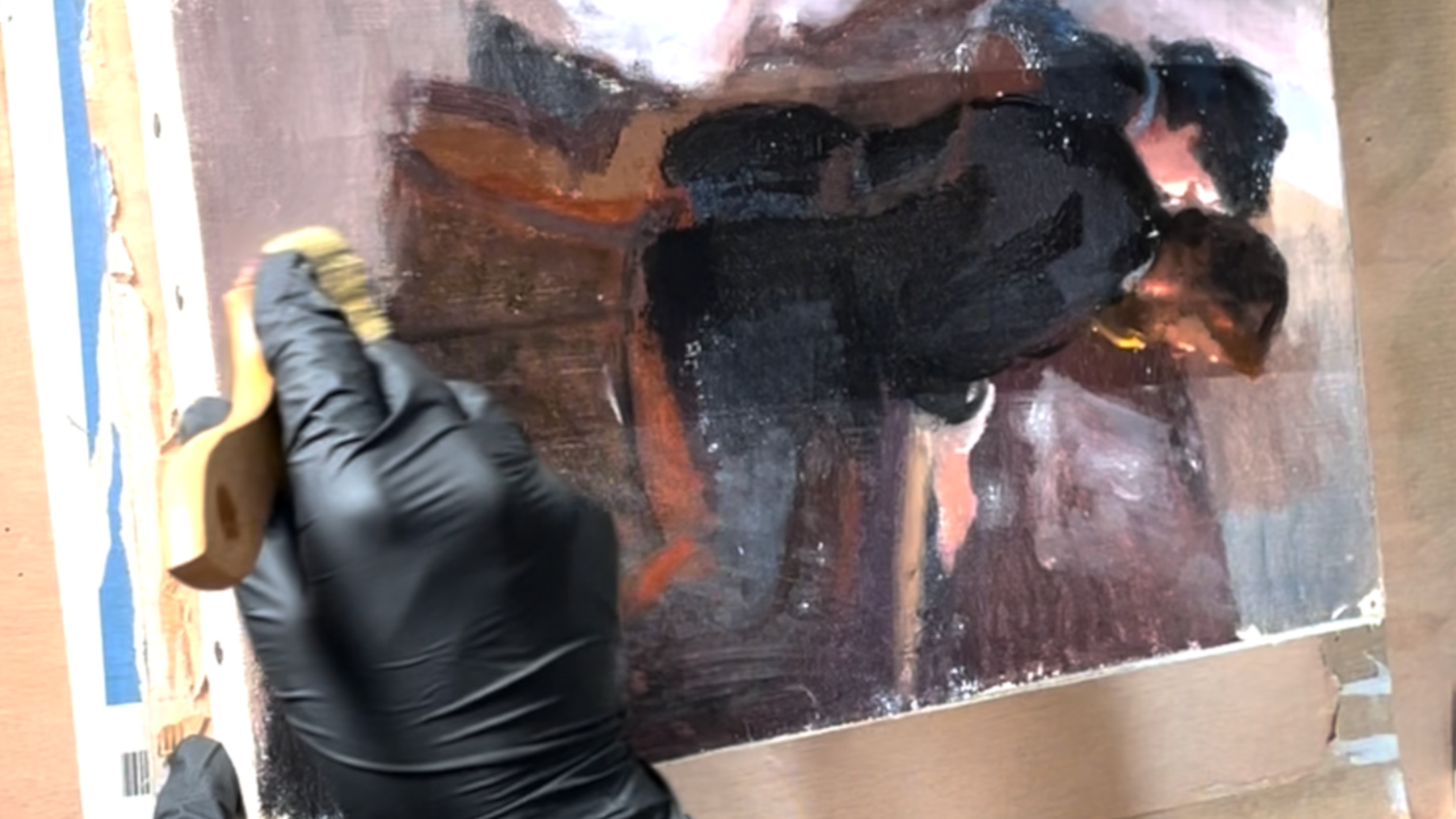
- Brush application for optimal control of final rendering (gloss, matte…)
- Pad application for precise varnish distribution on surface
- Fine spraying for textured surfaces, large formats…
- Combined methods to obtain particular effects
- Multi-layer applications for reinforced protection or specific optical effects
For contemporary artworks, I also master specific techniques:
- Differentiated varnishing for artworks playing on matte/glossy contrasts
- Localized protection for mixed material artworks with variable needs
- Varnishes with special optical properties (anti-reflection, reinforced anti-UV…)
- Alternative protection systems for artworks that cannot receive traditional varnish
4. An eco-responsible approach
My work philosophy at Atelier CROMA translates concretely in my varnishing choices:
- Privileged use of low VOC products (Volatile Organic Compounds)
- Use of ecological solvents (ex: Labovert© type), when adapted
- Precise dosing to limit product quantities used
- Controlled application conditions to limit solvent evaporation in the atmosphere
When to consider varnish application?
This intervention may be indicated in various situations:
End of a conservation process to protect and unify the whole
Unvarnished artwork presenting vulnerability to environmental factors
Old degraded varnish having been removed and requiring replacement
Preparation for an exhibition or transport requiring reinforced protection
Aesthetic harmonisa-tion desired by the owner (with respect for artwork integrity)
Preventive protection of an artwork exposed to unfavorable conditions
It’s important to note that certain contemporary artworks are deliberately not varnished by artist’s choice. In these cases, I propose adapted protection alternatives or preventive conservation recommendations.
Why choose Atelier CROMA for varnishing your artworks?
At Atelier CROMA, I offer specific expertise for varnishing modern and contemporary artworks:
In-depth knowledge of varnishes adapted to contemporary materials
Aesthetic sensitivity allowing to respect and enhance artistic intention
Ecological approach favoring solutions with low environmental impact
Technical mastery of different application methods according to specific needs
Holistic vision considering the artwork in its material and conceptual entirety
Varnish application, although seemingly simple in appearance, is a delicate operation that can radically transform an artwork’s appearance. It requires particular expertise, both in material choice and application techniques, to guarantee a result respectful of the artwork and durable over time.
Request a personalised estimate
If your artwork requires varnish protection or if you simply want advice on the opportunity of such intervention, I invite you to contact me. After an in-depth examination, I can propose a detailed estimate and an approach adapted to your artwork’s specificity.