Stretching
What is it for?
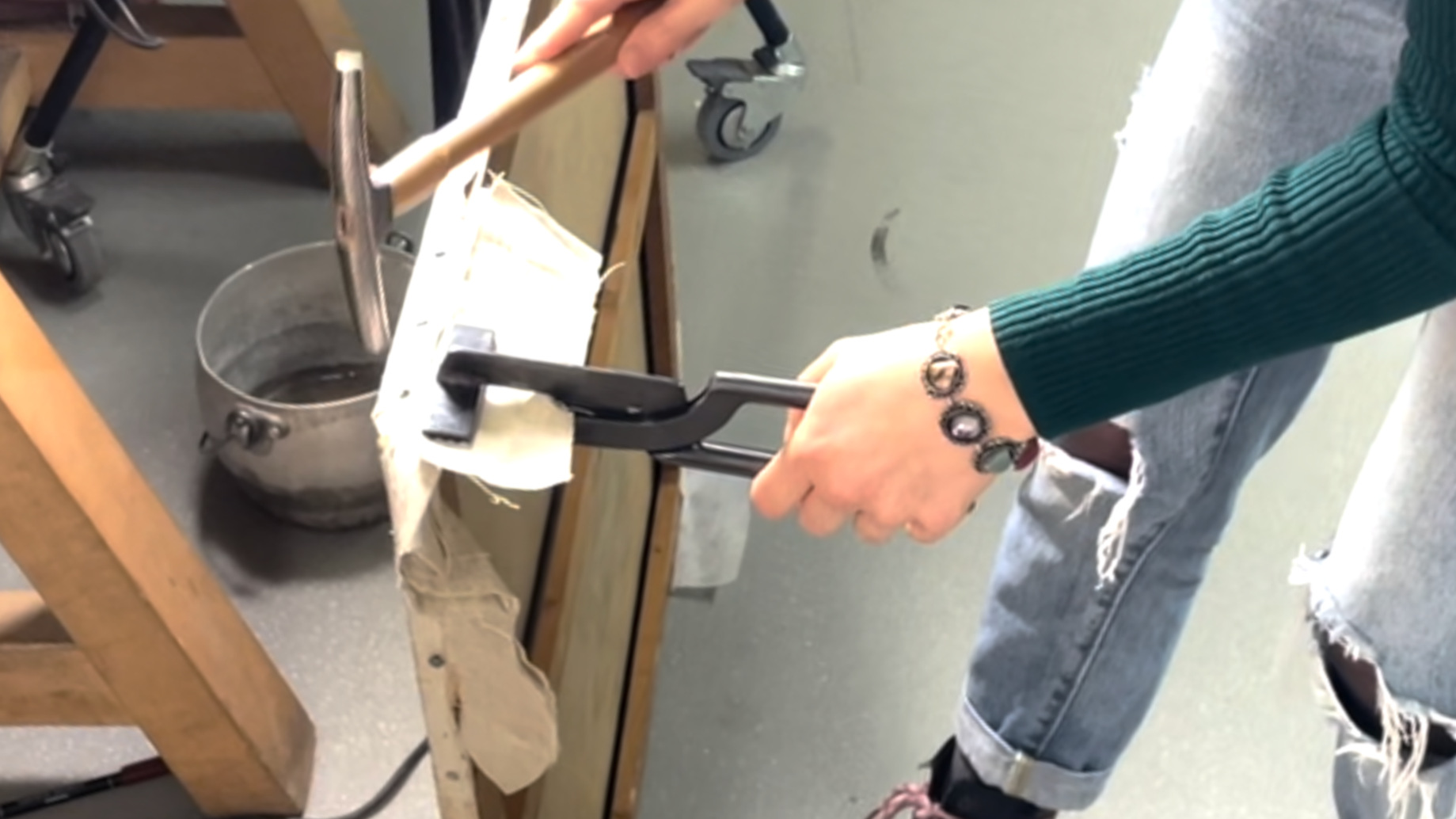
Stretching is a frequent operation in conservation of paintings on canvas that consists of reestablishing optimal and homogeneous tension of textile support on its stretcher. This intervention is essential to preserve the artwork’s structural integrity and ensure its stability and longevity.
A correctly stretched canvas allows to:
Eliminate deformations and undulations that disturb the artwork’s reading and can become irreversible
Prevent cracks and lifting of paint layer due to irregular support movements
Uniformly distribute mechanical constraints on the entire surface
Optimize aesthetic presentation of the artwork in its frame or exhibition space
Limit support vibrations that, over time, weaken paint layer adhesion
A particular stake for contemporary art
In the field of modern and contemporary art, my specialty at Atelier CROMA, stretching presents specific problematics:
- Modern industrial canvases have different mechanical behaviors from traditional canvases; their good tension is therefore essential
- Large formats characteristic of contemporary art require particular attention to force distribution
- Mixed media artworks or comprising relief elements impose technical adaptations
How I proceed at Atelier CROMA?
As a conservator specialized in modern and contemporary art, I approach stretching with a rigorous methodology, adapted to each artwork’s specificities:
1. Prior diagnosis
Before any intervention, I carry out complete evaluation:
- Analysis of current tension state and mapping of relaxation zones
- Evaluation of stretcher capacity to maintain adequate tension
- Verification of edge condition and their aptitude to support new tension
- Measurement of existing deformations and their impact on paint layer
- Identification of specific constraints linked to the artwork’s constitutive materials
2. Stretcher preparation and adaptation
To guarantee optimal stretching:
- Verification of structural solidity of stretcher and reinforcement if necessary
- Angle adjustment to ensure perfect squaring
- Installation of functional keys on keyed stretchers to allow precise adjustment
- Stretcher edge adaptation (beveling, sanding) to avoid canvas marks
3. Stretching techniques adapted to contemporary art
I mobilise different techniques according to modern or contemporary artwork nature:
- Progressive de-tensioning of entire canvas starting by removing existing fixings
- Deformation treatment by controlled humidification and drying under tension when necessary and if the artwork permits
- Sequential re-tensioning by opposite quadrant to harmoniously distribute tension
- Adapted fixing (staples, nails, or non-invasive systems according to case)
4. Final control and adjustments
Once the artwork is stretched:
- Verification of tension homogeneity
- Visual control under raking light to detect possible residual deformations
- Final adjustments of keys or fixings to optimize force balance
- Photographic documentation of state after intervention
An ecological approach
My environmental approach translates concretely in my stretching approach:
Responsible materials
- Use of durable fixing systems limiting replacement needs
- Preference for natural origin materials when compatible with the artwork
Eco-responsible work methods
- Favor mechanical techniques rather than chemical for deformation treatment
- Limit energy consumption by optimizing work processes
- Favor reuse of functional elements of original stretcher
- Reduce waste generated by intervention to strict minimum
Durable solutions
- Propose tension systems adapted to exhibition conditions to limit future interventions
- Advise on good preventive conservation practices to maintain optimal tension
- Design custom solutions
considering specific environmental constraints
When to consider stretching?
Stretching is recommended in several situations:
- Visible canvas relaxation creating undulations or “hammock” effect
- Localised deformations affecting surface flatness
- Distended edges no longer maintaining adequate tension
- After transport or prolonged storage in non-optimal conditions
- Following important hygrometric variations having affected support tension
- Before an exhibition to optimize aesthetic presentation of the artwork
- In prevention for artworks presenting support fatigue signs
Why choose Atelier CROMA for stretching your artworks?
As a conservator specialized in modern and contemporary art, Zoé Sallin offers you:
Specific expertise in treating modern and contemporary supports
In-depth knowledge of mechanical behaviors of industrial canvases
Adapted techniques to particularities of 20th and 21st century artworks
Particular sensitivity to large format artworks and synthetic preparations
Ecological commitment guiding material and method choices
Stretching, although apparently simple, is a delicate intervention that requires fine understanding of mechanical properties of different materials constituting the artwork. At Atelier CROMA, I put this expertise at your artworks’ service to ensure their stability and longevity.
Request a personalised estimate
Does your artwork present signs of relaxation or support deformations? Don’t hesitate to contact me for a personalised diagnosis and an estimate adapted to your particular situation.