Tear Mending
What is it for?
Tear mending is an essential conservation intervention that aims to restore structural continuity of a canvas having suffered mechanical damage. An untreated tear represents a major fragility point that, with time and environmental variations, can worsen considerably and jeopardize the artwork’s integrity.
This intervention allows to:
Structurally stabilize the damaged zone to avoid tear extension
Restore the aesthetic aspect of the artwork by eliminating visual rupture caused by the tear
Reestablish uniform tension on the entire canvas, allowing balanced distribution of mechanical forces
Prevent collateral damage such as lifting or pictorial matter losses around the traumatized zone
A particular stake for contemporary art
For modern and contemporary artworks, my specialty at Atelier CROMA, tear mending presents specific challenges:
Modern industrial canvases often possess different mechanical characteristics from traditional canvases
Synthetic preparations and contemporary paint layers (acrylic, vinyl, resins…) react differently to interventions
Tears on mixed media artworks require fine adaptation of mending techniques
How I proceed at Atelier CROMA?
As a conservator specialized in modern and contemporary art, I implement a rigorous methodology adapted to each situation:
1. In-depth diagnosis
I begin by carrying out detailed analysis of:
- Exact nature of the tear (linear, star-shaped, with matter loss…)
- Edge condition of the tear (frayed, clean, with deformation…)
- Mechanical behavior of the canvas around damaged zone
- Residual tensions exercised on the tear
- Paint layer condition in immediate vicinity and on tear zone
2. Intervention preparation
Before mending proper:
- Artwork removal from stretcher if necessary
- Stabilization of weakened paint flakes around the tear
- Face protection by temporary facing if intervention requires it
- Flattening of deformations adjacent to the tear
- Meticulous cleaning of back fibers to optimize adhesion
3. Techniques adapted to contemporary artworks
To mend a tear on a modern or contemporary artwork, I employ different techniques according to damage nature:
For clean tears:
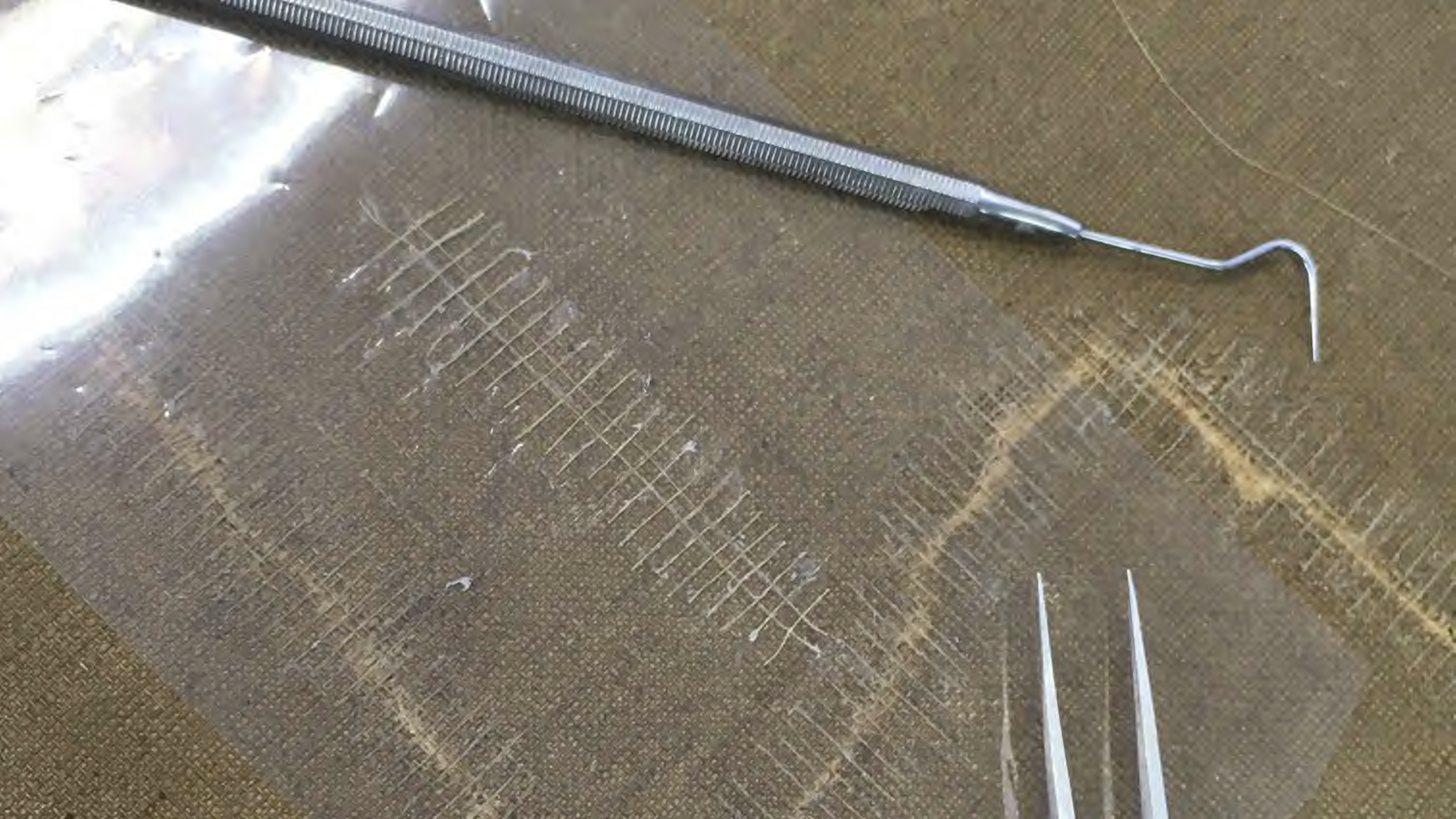
- Precise realignment of tear edges, fiber by fiber
- Thread-by-thread placement to reconstitute weft and warp continuity
- Use of reversible adhesives compatible with modern materials
- Localised reinforcement, such as a reinforcement patch, on the back with flexible and stable materials
For complex tears or with matter loss:
- Weaving reconstitution by insertion of compatible fibers
- Structural filling with adapted materials
- Canvas inlays for important losses
- Flexible bridge system to harmoniously distribute tensions
4. Finishing and integration
Once structure is reestablished:
- Adapted filling to recover surface flatness
- Chromatic retouching for perfect visual integration
- Localised varnishing if necessary to harmonize gloss
- Progressive re-tensioning on original stretcher or adapted stretcher
An ecological approach
My environmental approach translates concretely in my tear mending approach:
- Privileged use of natural origin adhesives when the artwork nature permits
- Selection of biodegradable reinforcement materials when possible
- Use of solvents with low environmental impact
- Reasonable waste management from intervention
When to have a tear mended?
It’s recommended to intervene quickly as soon as a tear appears, even minimal, because:
A small untreated tear will tend to extend under tension effects
Edges of an old tear tend to deform, making mending more complex
Exposed fibers oxidize and progressively lose their flexibility and resistance
Hygrometric variations
accentuate deformations around weakened zone
Pictorial matter losses can occur near the tear
Why choose Atelier CROMA for tear mending of your artworks?
As a conservator specialized in modern and contemporary art, I offer you:
Specific expertise in treating modern and contemporary supports
In-depth knowledge of modern materials and their mechanical behaviors
Cutting-edge techniques adapted to 20th and 21st century artwork specificities
Particular sensitivity to mixed media artworks and composite materials
Ecological commitment guiding material and method choices
Tear mending is an intervention that requires precision, patience and technical expertise. At Atelier CROMA, I put these qualities at your artworks’ service to ensure optimal conservation while respecting their aesthetic and historical integrity.
Request a personalised estimate
You have an artwork presenting a tear or support damage? Don’t wait for the situation to worsen. Contact me for a personalized diagnosis and an estimate adapted to your particular situation.