Filling
What is it for?
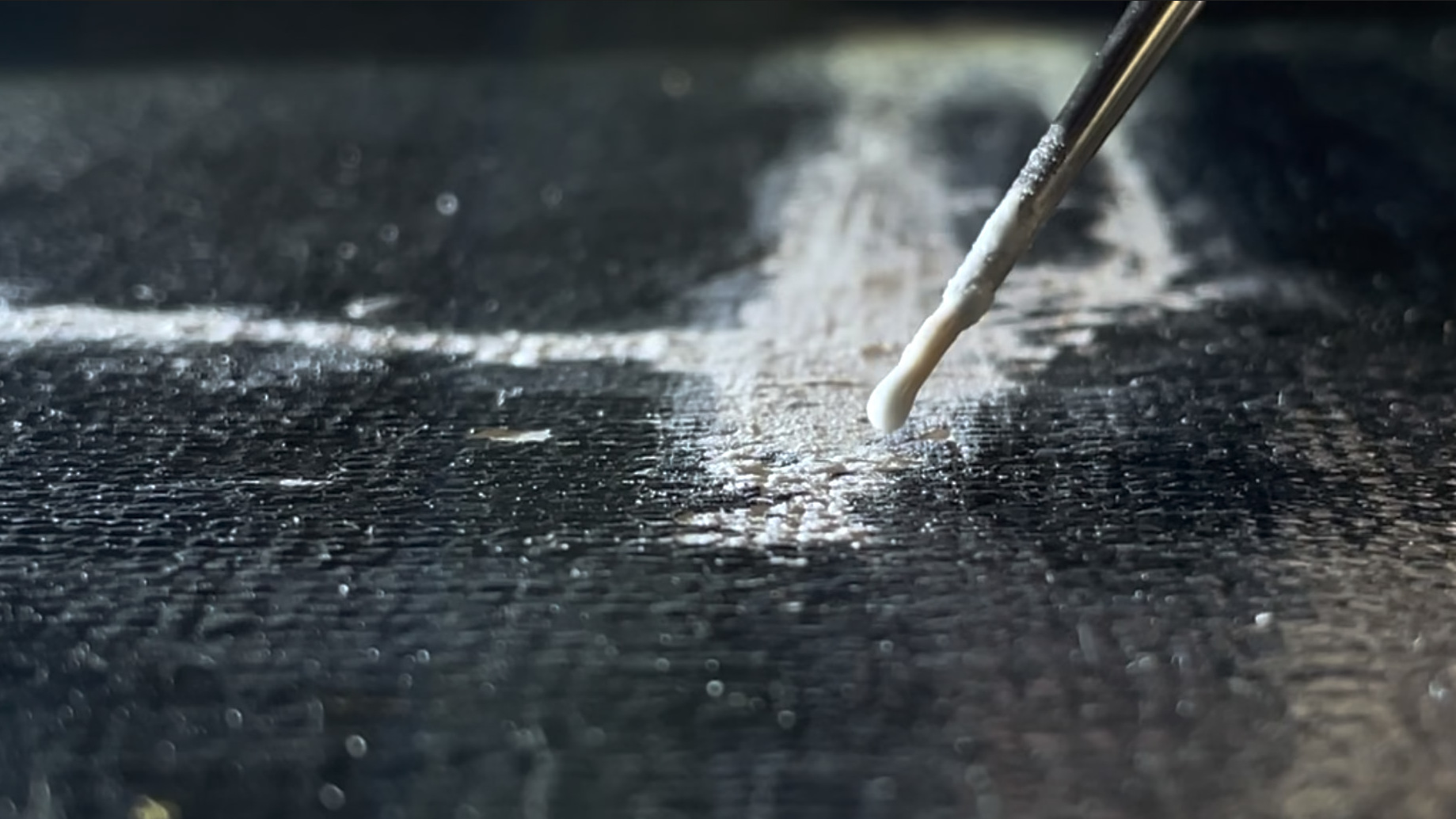
Filling is a determining step in an artwork’s conservation process. This precise and meticulous intervention consists of filling losses (zones where the paint layer and sometimes the underlying preparation have disappeared) with a substitute material called “filling”. Filling refers to the work of modeling, leveling and texturing this material to integrate it harmoniously into the original artwork.
Essential reconstruction for the artwork’s integrity
Losses in a paint layer are not only an aesthetic problem. They also represent:
Structural fragility that can progressively extend
Rupture in visual reading of the artwork
Entry point for moisture and external pollution
Zone of mechanical tension on loss edges
Filling therefore allows to:
- Mechanically stabilize the artwork by avoiding loss propagation
- Prepare the necessary support for colored retouching
- Recreate visual and material continuity of the surface
- Protect the support from external aggressions
A technical challenge in modern and contemporary art
In the field of modern and contemporary art, my specialty at Atelier CROMA, filling presents important particularities:
- Great diversity of textures: smooth industrial surfaces, expressive impasto, matter effects…
- Intentional level plays between different pictorial zones
- Integration of unconventional materials requiring adapted fillings
- Unvarnished artworks where retouching will be directly visible, without varnish filter
- Specific artistic intentions concerning the artwork’s materiality
How I proceed at Atelier CROMA
As a conservator specialized in modern and contemporary art, I approach filling with a rigorous methodology perfectly adapted to each artwork:
1. Prior analysis
- Étude de la stratigraphie (succession des couches) de l’œuvre
- Observation minutieuse des textures et effets de surface à proximité des lacunes
- Compréhension de la technique de l’artiste pour respecter son intention
2. Sélection et préparation des mastics
I meticulously choose materials according to:
- Chemical nature of original layers to guarantee compatibility
- Necessary flexibility according to loss location and size
- Required optical properties (translucency, opacity, gloss)
- Ecological criteria and reversibility essential to ethical conservation
The fillings I use can be:
- Based on calcium carbonate (chalk) and natural glue for traditional artworks
- Modified acrylic preparations for contemporary artworks
- Composite materials specifically formulated to adapt to particular cases
3. Application and filling
This step requires great technical precision:
- Controlled leveling respecting surrounding surface subtleties
- Precise modeling to reproduce original texture effects
- Adapted finishing preparing the surface to receive colored retouching
For modern and contemporary artworks, I master various specific techniques:
- Texture impression using silicone molds taken from intact zones
- Integration of materials similar to originals (for mixed media)
4. Preparatory finishing
Before moving to retouching:
- Verification under different lighting to ensure perfect integration
- Isolation of filling to guarantee reversibility of future retouching
When is filling necessary?
This intervention may be required in various situations:
Presence of visible losses where paint layer is absent
Shocks or accidents
having caused matter losses
Old lifting having led to flake falls
Old defective treatments
requiring revision
Preparation of an artwork for an important exhibition or a sale
Preventive stabilisation
of a weakened artwork
Why choose Atelier CROMA for filling?
At Atelier CROMA, I offer specific expertise for filling modern and contemporary artworks:
In-depth knowledge of contemporary materials and their specific requirements
Ecological approach favoring bio-sourced materials with low environmental impact
Mastery of advanced techniques
adapted to complex contemporary surfaces
Minimalist and respectful vision of original artistic intention
Specialized training in contemporary art conservation allowing to apprehend particular challenges of these artworks
Filling is a crucial intermediate step that, although often invisible in the final result, largely conditions the quality and durability of conservation. It requires an expert hand and in-depth knowledge of materials, two qualities that I put at your artworks’ service.
Request a personalised estimate
If your artwork presents losses requiring filling, I invite you to contact me. After an in-depth examination, I can propose a detailed estimate and a respectful intervention strategy for your artwork’s integrity.