Removal of Old Restauration
What is it for?
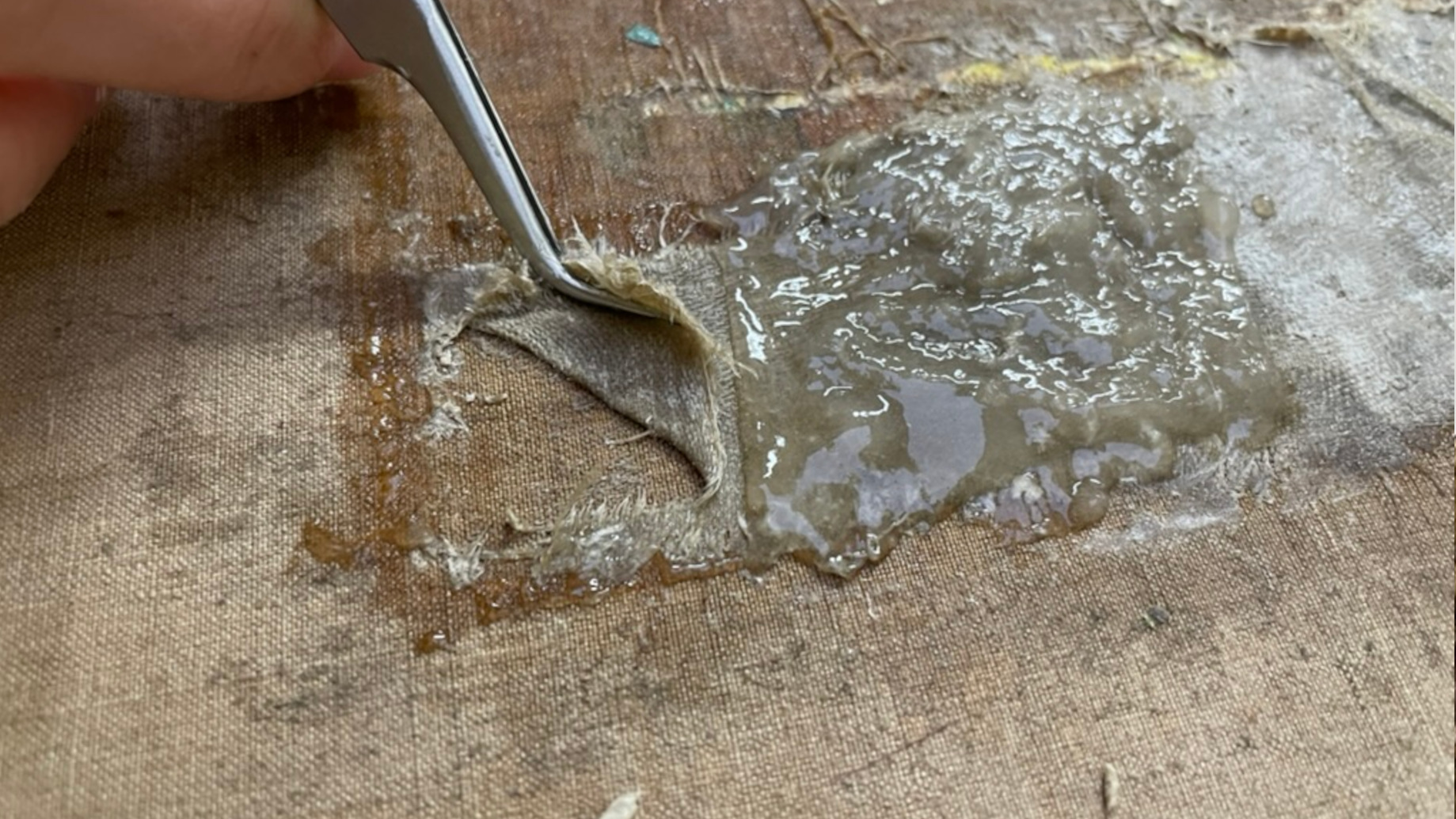
Removal of old conservation treatment is a specialised intervention that consists of removing prior treatments become inappropriate, unaesthetic or damaging for the artwork. This delicate process is often necessary when past interventions, carried out with techniques or materials now obsolete, compromise the work’s integrity or readability.
This crucial intervention allows to:
Eliminate degraded or inadequate materials that threaten the artwork conservation
Remove altered or clumsy retouching
that disturbs aesthetic reading
Remove yellowed or cracked varnishes that modify original color perception
Undo defective reinforcement patches or linings that create harmful tensions
Correct interventions not respecting original artistic intention
Prepare support for new conservation complying with current standards
A particular stake for modern and contemporary art
In my specialty at Atelier CROMA, modern and contemporary art, removal of old treatment presents specific challenges:
Contemporary art works have sometimes undergone emergency interventions with inappropriate industrial materials
Experimental materials used by modern artists can react unpredictably to conventional conservation products
Mixed techniques require differentiated approach according to zones to be treated
Original artistic intentions must be meticulously documented to avoid any erroneous interpretation
How I proceed at Atelier CROMA?
As a conservator specialized in modern and contemporary art, I apply rigorous methodology for removal of old treatment:
1. In-depth analysis of prior treatments
Before any intervention, I carry out:
- Identification of materials used during previous treatments
- Complete photographic documentation under different lighting (direct, raking, UV)
- Evaluation of treatment impact on artwork’s current state
- Analysis of potential chemical interactions between original materials and those of treatments
2. Development of progressive and selective strategy
I then develop custom protocol:
- Hierarchization of interventions to remove according to their harmfulness and aesthetic impact
- Selection of least invasive techniques adapted to each type of treatment to remove
- Determination of zones requiring particular protection during process
- Planning of progressive approach allowing to evaluate results at each stage
- Preparation of replacement solutions for elements to remove (consolidants, adhesives, retouching)
3. Specific techniques for different intervention types
For retouching and overpaints:
- Selective solubilisation with solvents specifically chosen to preserve original paint layer
- Precision mechanical removal for interventions resistant to solvents
- Combined techniques associating chemical and mechanical action for complex cases
- Intervention microscopy for particularly delicate zones
For degraded varnishes:
- Progressive layer-by-layer removal respecting significant historical strata
- Use of solvent mixtures adapted to specific varnish composition
- Controlled-action gels and compresses to limit solvent penetration
- Differentiated removal techniques according to zones of variable sensitivity
For structural interventions:
- Methodical dismantling of linings and reinforcements become inadequate or damaging
- Controlled elimination of old adhesives without compromising original canvas
- Correction of structural interventions creating tensions or deformations
4. Approach adapted to contemporary specificities
For modern and contemporary artworks, I take particular precautions:
- Systematic prior tests on less visible zones
- Micro-removal windows to evaluate underlying state
- Continuous protocol adaptation according to observed reactions
- Absolute respect for original matter and artistic intentions
My ecological approach to removal of old treatment
At Atelier CROMA, my commitment to environmentally friendly conservation also guides my removal of old treatment practices:
Favor low toxicity solvents with reduced environmental impact
Use mechanical methods before resorting to chemical solutions
Develop aqueous gels to limit petroleum solvent use
Adopt recycling systems for solvent residues
Prefer enzymatic cleaning techniques for organic adhesives
Optimize product quantities used through targeted and controlled applications
Choose sustainable alternatives to replace removed materials
A new start for your artwork
Removal of old treatment often represents a pivotal moment in an artwork’s life. It allows starting on sound bases, eliminating inappropriate interventions from the past to prepare respectful conservation meeting current standards.
Why choose Atelier CROMA to remove old treatment ?
By calling on my expertise at Atelier CROMA, you offer your artwork a second chance to reveal its true essence, freed from erroneous interpretations or inappropriate materials that could compromise its longevity.
Ask a personalised estimate
You own an artwork having undergone unfortunate treatments or aging poorly? Don’t hesitate to contact me to discuss removal of old treatment possibilities and obtain personalised quote to restore your piece’s original splendor.