Varnish Removal
What is it for?
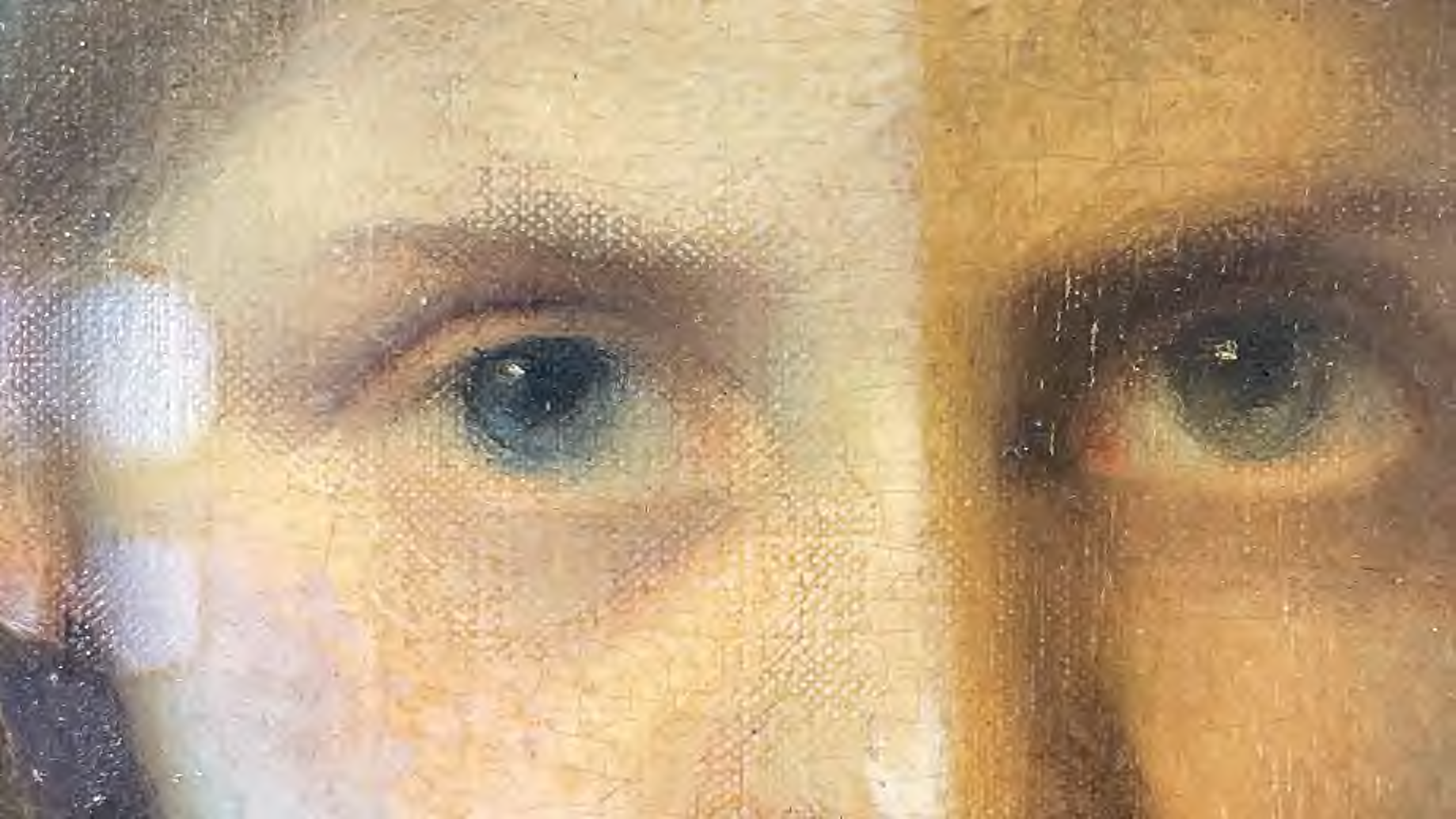
Varnish removal is a delicate intervention that consists of thinning or partially removing the varnish layer protecting an artwork’s pictorial surface. This operation, far from being systematic, responds to specific conservation and aesthetic needs.
Why remove varnish?
Over time, varnishes undergo a natural degradation process (oxidation) that can manifest in several ways:
Yellowing or darkening: natural or synthetic resins progressively oxidize, creating a yellowish filter that alters perception of original colours
Opacification: certain varnishes become opaque, thus partially or totally veiling the artwork
Cracks and microfissures: aging can cause a network of cracks that disturb the artwork’s reading
Formation of “varnish blanching”: appearance of whitish zones due to moisture infiltrated in the varnish
Gloss irregularities: over time, varnish can present matte and glossy zones
Varnish removal therefore allows to:
- Recover the original colours of the artwork, often masked by oxidised varnish
- Improve readability of pictorial details and subtle nuances
- Prepare the surface for possible retouching or application of new varnish
- Eliminate weakened zones of varnish that could lead to future degradations
A particular challenge for modern and contemporary art
In the field of modern and contemporary art, varnish removal presents specificities that I master perfectly at Atelier CROMA:
- Variety of formulations: contemporary artists often use industrial or experimental varnishes whose chemical composition can be complex
- Fragile paint layers: certain modern techniques (diluted acrylics, thin glazes, etc.) are particularly sensitive to solvents
- Artistic intention: varnish can be an integral part of artistic expression (matte/glossy contrasts, particular textures)
- Tinted or coloured varnishes: some artists use varnishes that voluntarily modify colour perception
How I proceed at Atelier CROMA
As a conservator specialized in contemporary art, I approach each varnish removal with a rigorous methodology perfectly adapted to the artwork’s specificity:
1. In-depth diagnosis
- Varnish analysis and its state of degradation
- Adhesion evaluation between varnish and paint layer
- Thickness determination and varnish homogeneity
- Photographic documentation under different lighting (direct, raking, UV)
2. Development of intervention strategy
- Preliminary tests on discreet zones to determine adapted solvents or mixtures
- Choice of removal method: free solvents, gels, emulsions or aqueous systems
- Definition of desired level of removal, in agreement with the artwork’s owner
- Planning of work stages by zones
3. Eco-responsible intervention
I systematically favour the most environmentally friendly approaches:
- Use of low toxicity solvents or aqueous systems when possible
- Use of gels and emulsions that limit evaporation and solvent penetration
- Containment and recycling of chemical waste
4. Precision work
- Intervention under binocular magnifier for delicate zones
- Progression by test windows allowing permanent result control
- Differentiated removal according to the artwork zones and their specific needs
- Constant monitoring of paint layer reactions
When to consider varnish removal?
This intervention can be considered in several situations:
Your painting presents a veiled or yellowed appearance that alters colour perception
Whitish zones have appeared, particularly visible on dark tones
The varnish presents cracks or lifting that threaten the artwork’s integrity
You notice gloss differences or surface irregularities
The painting must be photographed or exhibited and its current appearance doesn’t do it justice
It’s important to note that varnish removal is not a systematic operation and must always result from a thoughtful decision, based on precise diagnosis.
Why choose Atelier CROMA for varnish removal?
At Atelier CROMA, I offer specific expertise for varnish removal of modern and contemporary artworks:
In-depth knowledge of varnishes used in contemporary art
Minimalist and progressive approach guaranteeing respect for the artwork’s integrity
Eco-responsible philosophy in the choice of products and methods
Mastery of advanced techniques such as aqueous cleaning systems or gels
Constant dialogue with the owner to define the desired level of intervention
Varnish removal is often followed by revarnishing that will offer the artwork new protection, adapted to its nature and environment.
Ask a personalised estimate
If you own an artwork whose varnish seems altered or if you simply want an evaluation of its condition, I invite you to contact me. After an in-depth examination, I can propose a detailed estimate and advise you on the relevance of varnish removal for your artwork.