Consolidation, general or localised
What is it for?
Consolidation is a crucial intervention in conservation that aims to consolidate and stabilise an artwork’s paint layer when it shows signs of fragility, delamination or loss of adhesion. This delicate operation can concern the entire surface (general consolidation) or be limited to specific zones presenting problems (localised consolidation).
An essential intervention for the artwork’s longevity
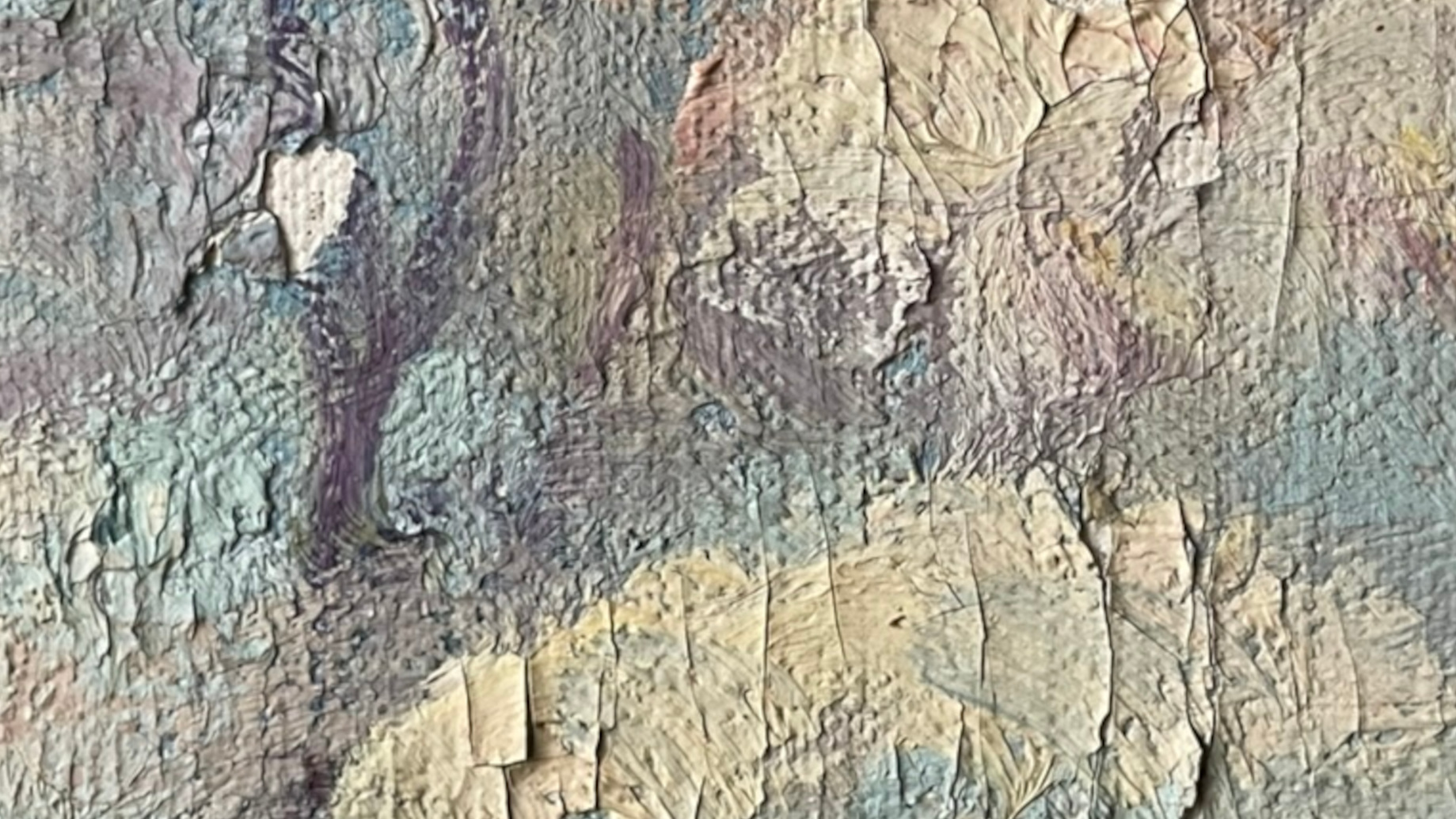
Over time and under the influence of various environmental factors (hygrometric variations, thermal shocks, inappropriate handling), the paint layer can progressively lose its adhesion to the support, leading to:
Lifting: the paint layer detaches from the support, forming blisters or flakes
Powdering: pigments detach and transform into fine dust
Flaking: fragments of pictorial matter completely detach
Cracks: fissures appear and weaken the whole
Consolidation allows to:
Stop the degradation process by consolidating fragile pictorial matter
Prevent matter losses that would be irreversible
Stabilize the surface to allow other conservation interventions
Restore cohesion and adhesion to the artwork’s constitutive layers
Particular complexity in modern and contemporary art
In the field of modern and contemporary art, my specialisation at Atelier CROMA, consolidation presents specific challenges:
- Diversity of materials: acrylics, vinyls, gouaches, various resins, mixed media…
- Surfaces with intentional textures: impasto, reliefs, inclusions of various materials
- Unvarnished paint layers often more vulnerable to external aggressions
- Complex chemical interactions between industrial or experimental materials
- Intentional matte/gloss effects that must be preserved
How I proceed at Atelier CROMA
As a conservator specialized in modern and contemporary art, I approach each consolidation with a rigorous methodology adapted to the artwork’s specificity:
1. Precise diagnosis
- In-depth examination of the nature and extent of alterations
- Identification of causes of adhesion loss (technical defect, natural aging, accident…)
- Characterization of materials to determine compatible adhesives
- Mapping of zones requiring intervention
2. Development of intervention strategy
- Selection of adapted adhesive: acrylic resins, protein glues, cellulose ethers…
- Determination of optimal concentration according to surface porosity and fragility
- Choice of application method: syringe, brush, nebulization, suction table…
- Planning of stages for progressive and controlled intervention
3. Eco-responsible intervention
My ecological approach translates concretely in my consolidation methods:
- Privileged use of natural or bio-sourced adhesives when possible
- Use of low toxicity solvents for adhesive dilution
- Precise dosing to limit product quantities used
- Systematic recycling of waste according to their nature
4. Techniques adapted to contemporary artworks
- Consolidation by nebulization for very fragile or powdery surfaces
- Micro-injection for localised lifting
- Application under microscope for maximum precision
- Controlled weight placement with suitable interleafs to respect reliefs
- Vacuum consolidation systems for complex cases
When to consider consolidation?
This intervention may be necessary in various situations:
You notice flakes or lifting on your artwork’s surface
Powdery zones leave traces to touch or produce fine dust
The surface presents cracks that seem to worsen
The artwork has suffered an accident (shock, water infiltration, exposure to strong heat…)
You observe localised deformations of the paint layer
The artwork must be moved or transported and its fragility raises fears of matter losses
It’s crucial not to wait for the situation to worsen: early intervention often allows limiting the intervention and preserving more original matter.
Why choose Atelier CROMA for consolidation of your artworks?
At Atelier CROMA, I offer specific expertise for consolidation of modern and contemporary artworks:
In-depth knowledge of contemporary materials and their specificities
Custom approach considering each artwork’s singularity
Minimalist philosophy favoring the least invasive intervention possible
Absolute respect for material and aesthetic integrity of the artwork
Eco-responsible vision guiding product and method choices
Consolidation is often an essential preliminary step before considering other treatments like cleaning or retouching on artworks presenting the need. It sometimes constitutes the only necessary intervention to stabilize an artwork and guarantee its long-term conservation.
Request a personalised estimate
If you own an artwork presenting signs of fragility or paint layer adhesion problems, I invite you to contact me without delay. After an in-depth examination, I can propose a detailed estimate and an intervention strategy adapted to your artwork’s specificity.